
Discovering Moroccan Spices
Morocco’s Fragrant Treasures
In Morocco, spices tell a story far greater than cuisine alone. They speak of ancient trade routes, family traditions, and a true art of living passed down through centuries. In the medinas, their aromas accompany every moment: cumin drifts through the alleyways at dawn, cinnamon perfumes delicate pastries, while saffron slowly colors simmering tagines.
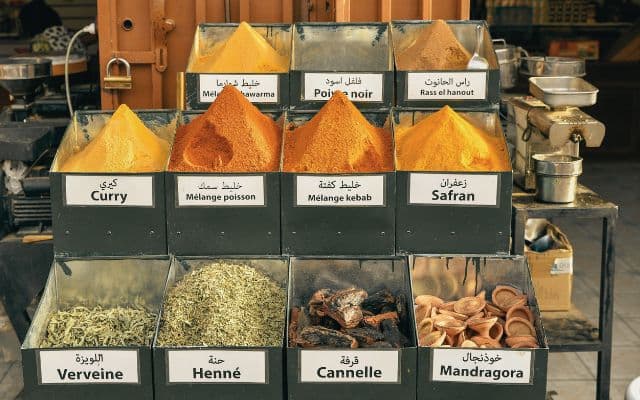
Some Moroccan spices are now celebrated around the world. Saffron from Taliouine, cultivated in the south of the country, is considered among the finest for its quality and intensely rich aroma. Ras el hanout, the iconic blend of Moroccan cuisine, can contain dozens of different spices depending on family recipes and the traditions of each spice merchant. Its name literally means “head of the shop” or “the best of the store,” once referring to the most precious blend prepared by master spice sellers.
Cumin, ginger, turmeric, paprika, and anise also hold an essential place in Moroccan dishes, as well as in certain traditional wellness preparations.
What often surprises travelers most is the way spices completely infuse the atmosphere of Moroccan cities. In Marrakech, Fez, or Essaouira, the scents shift from one street to another, sometimes creating the feeling of traveling entirely through fragrance alone.
The Colors and Fragrances of the Souk
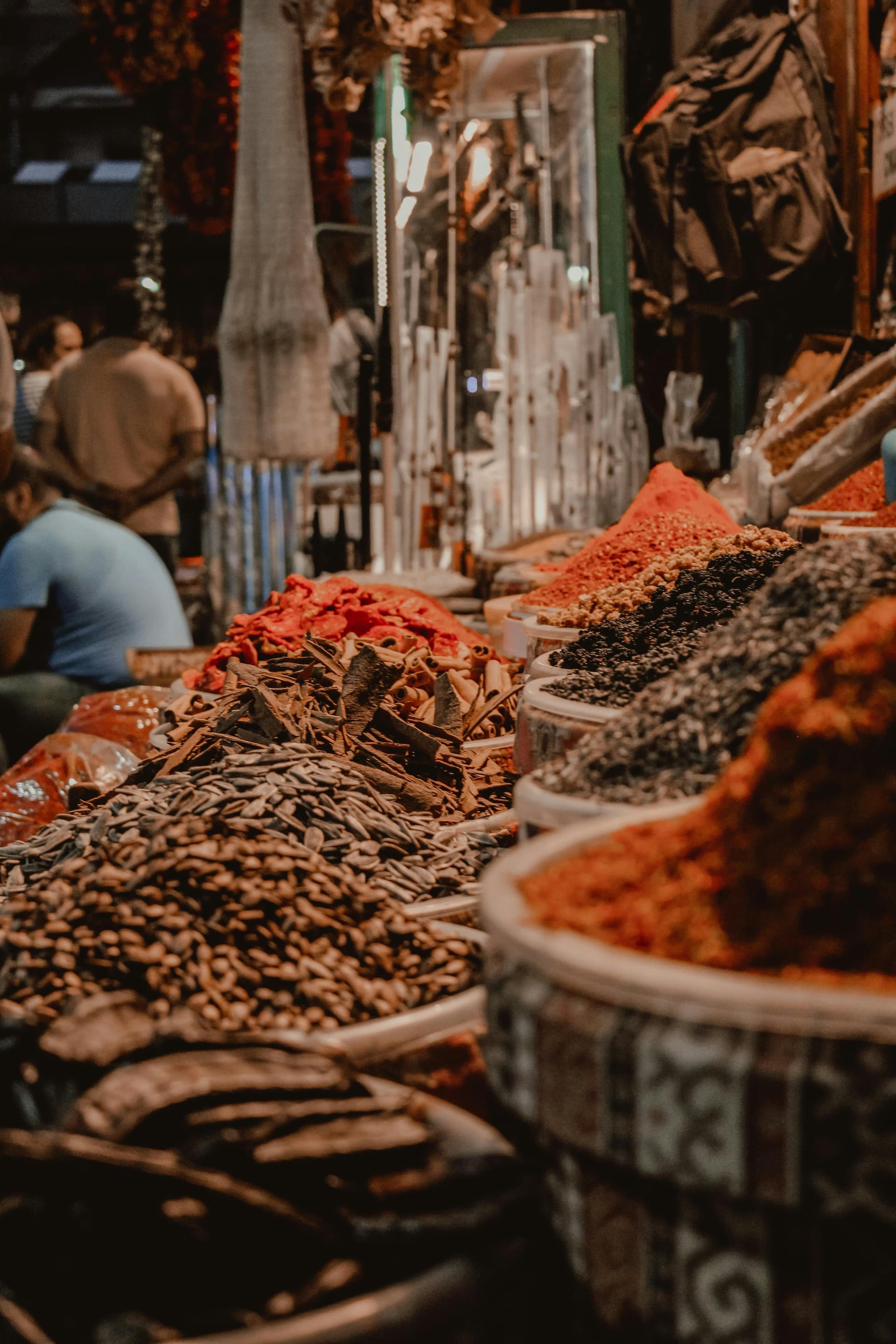
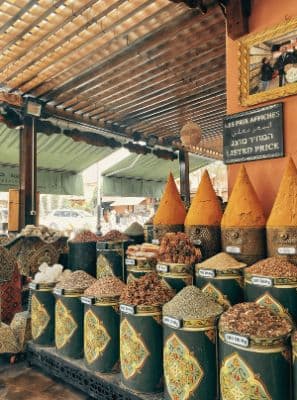
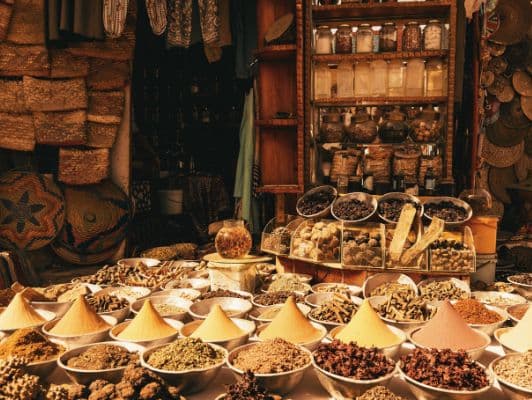
In Morocco’s souks, spices appear like landscapes made of color. Pyramids of saffron, deep red paprika, golden turmeric, and earthy cumin transform the market stalls into living paintings bathed in light.
In Marrakech, some alleyways seem entirely guided by fragrance. Merchants fill bags of spices by hand while the scents of cinnamon, nutmeg, and orange blossom drift through the warm air of the medina.
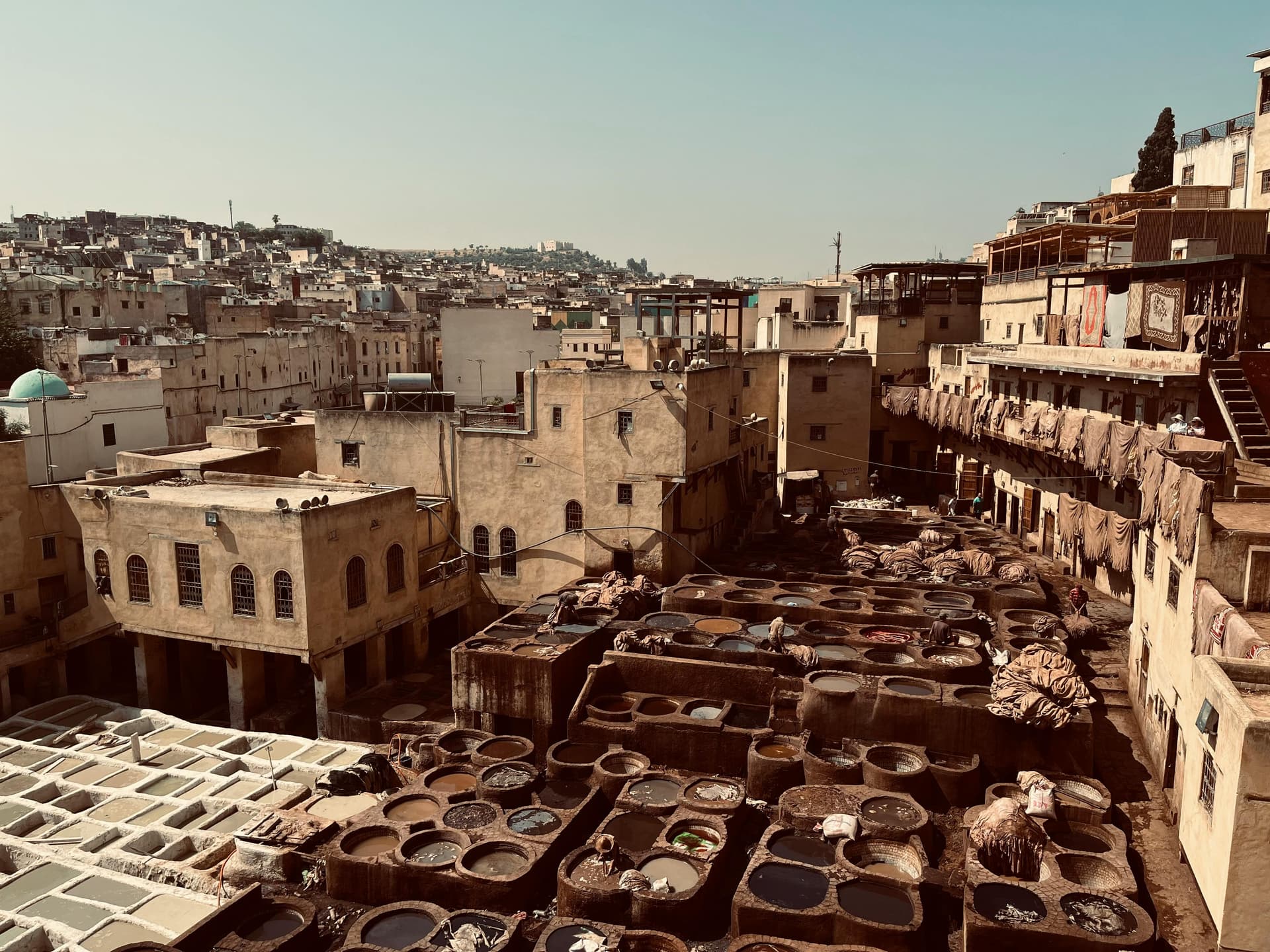
In Fez, the markets reveal a more ancient atmosphere, almost untouched by time. Traditional herbalist shops still display blends prepared according to recipes passed down through generations.
Then come the plantations and agricultural regions. Around Taliouine, saffron fields reveal another side of Morocco — quieter, more authentic, and far removed from the energy of the major cities.
As evening falls, the aromas of spices escape from kitchens and fill the terraces. The scent of a slowly simmering tagine becomes almost part of the journey itself.
Creating Your Own Blend
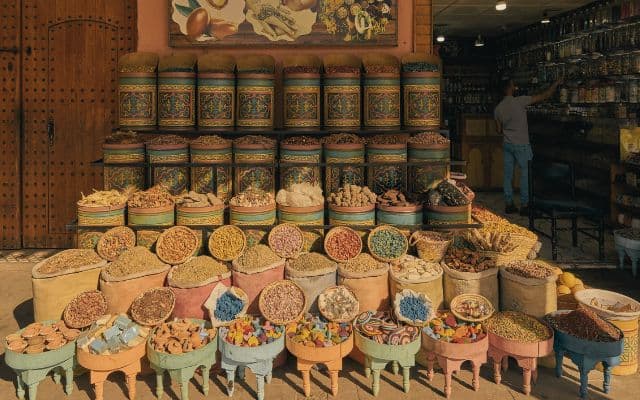
Discovering Moroccan spices often begins with a simple walk through the souks. Breathing in the scent of freshly ground blends, watching merchants prepare their mixtures by hand, or tasting tea infused with local herbs quickly transforms the visit into a deeply sensory experience.
Some workshops also offer the chance to learn how to recognize Morocco’s most iconic spices and understand their role in traditional cuisine. Preparing a saffron-infused tagine, working with ras el hanout blends, or discovering the secrets behind Moroccan mint tea adds an entirely new dimension to the journey.
One of the most appreciated experiences remains the opportunity to create your own spice blend. Guided by aromas and the advice of spice merchants or Moroccan chefs, travelers discover the delicate balance between cumin, cinnamon, ginger, paprika, and turmeric. Each blend becomes unique, almost personal like an olfactory memory of Morocco to take home.
Travelers also enjoy tastings organized in riads or traditional homes, where Moroccan flavors are slowly discovered through family recipes passed down over generations.
And then there are all the memories that travel back with you: a small pouch of saffron tucked into a suitcase, the scent of cumin escaping from a basket of spices, or the aroma of Moroccan tea instantly bringing back the alleyways of Marrakech.
In Morocco, spices are not only used for cooking. They become a way of traveling, feeling, and discovering the country differently.