The Soul of Moroccan Pottery
Earth shaped by time
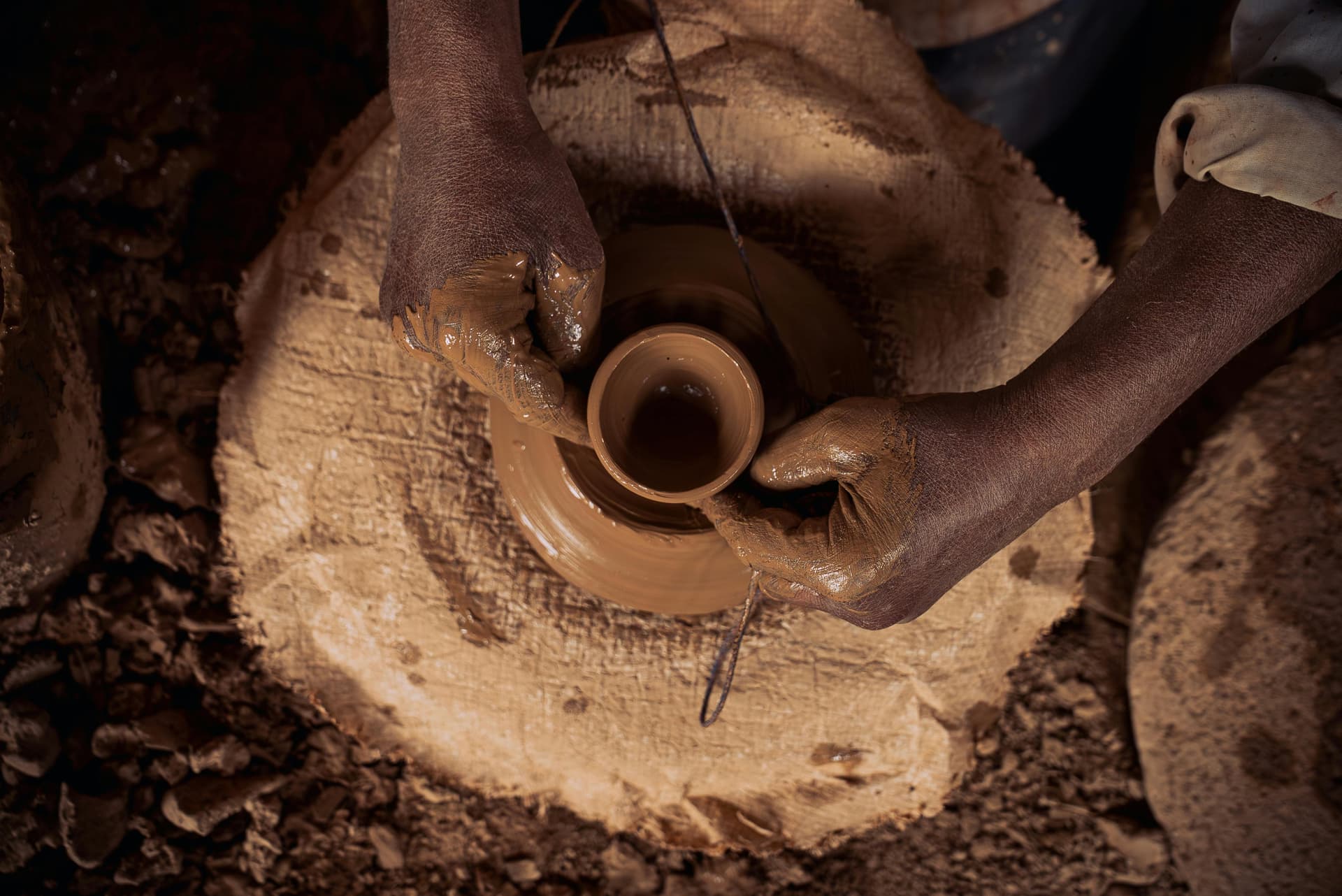
In Marrakech, pottery is part of an ancient craft, shaped by earth and fire. For centuries, artisans have worked clay with simple, precise gestures, giving birth to everyday objects and decorative pieces alike. Each creation bears the imprint of the hand that shaped it, with its irregularities, nuances and uniqueness.
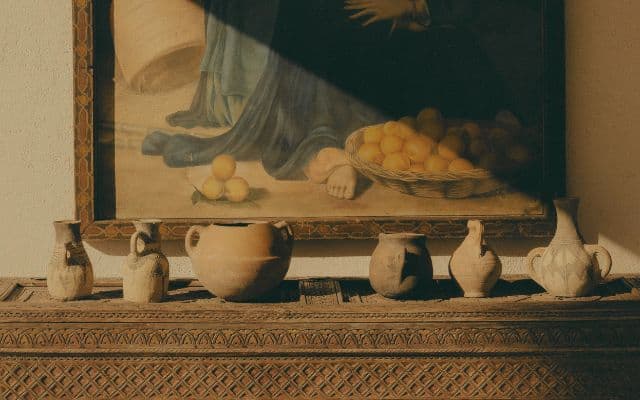
Moroccan pottery draws its roots from Berber and Andalusian traditions, where earth was already at the heart of domestic life. Fired in traditional kilns, sometimes still wood-fuelled, it reveals warm tones between ochre and deep red.
Here, earth becomes living matter. It transforms slowly, at the rhythm of gesture and firing, giving birth to objects both useful and deeply rooted in the city's history.
What the earth reveals in Marrakech
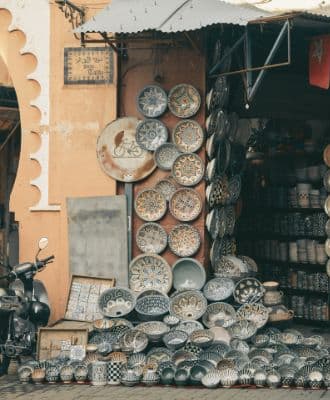
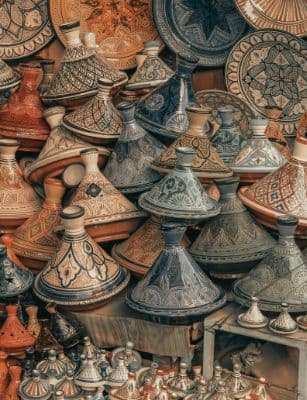
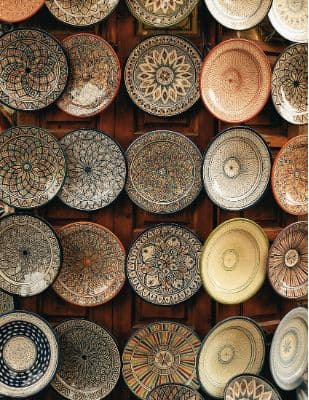
Wandering through the medina, pottery appears in touches, around the corner of a shop or a discreet courtyard. In the souks, shelves are lined with plates, tajines and jars in natural tones, sometimes enhanced with hand-painted motifs. The forms are simple, almost obvious, but each carries its own identity.
Moving away from the centre, certain quarters like Sidi Ghanem or workshops on the outskirts reveal another dimension. Here you discover production sites, wheels still turning, pieces drying in the sun.
The atmosphere is calmer, almost meditative. Between raw earth and finished object, everything plays out in these spaces, where time seems to slow and each step becomes visible.
Shaping the material, feeling the gesture
Initiating oneself to pottery means entering a work of repetition and rhythm. The earth imposes its logic: it yields, resists sometimes, forces you to adjust the gesture. An artisan guides the first steps, shows how to start a base, maintain tension, follow a line.
Gradually, the gesture becomes more fluid. The shaping builds, row after row, until the form appears. The experience demands patience and attention, but brings immediate satisfaction.
Beyond the object created, it's another relationship with time that settles in. Slower, more grounded, where each movement counts and the material guides the gesture as much as it reveals it.