
The Legacy of Leathercraft
A thousand-year tradition
In Marrakech, leather is one of those crafts that has crossed centuries without losing its essence. Wandering through the medina, it's hard not to imagine the generations of artisans who have shaped bags, babouches and saddles with the same precise gestures. Tanning, often carried out using ancestral methods, bears witness to a heritage deeply rooted in Moroccan culture.
The link between Morocco and leather extends beyond its borders. The word "maroquinerie" (leatherwork), used worldwide, has its origins in the leather-working expertise of Morocco, once exported to Europe.
Here, leather is not just a material — it's a living memory, passed from hand to hand. Each piece tells a story, between tradition and creation, like a fragment of the city you take with you.
What awaits you in Marrakech
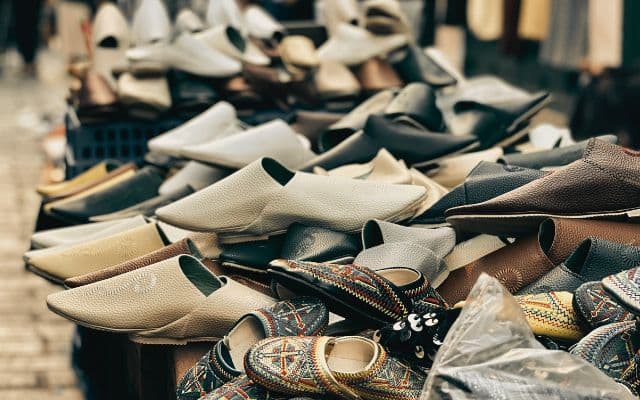
Venturing into the medina, leather naturally guides your steps towards well-known areas like Souk Smata, dedicated to babouches, or Souk El Kebir, where bags, belts and leather goods accumulate in organised bustle. Stalls overflow with colour, supple leathers are layered, and artisans sometimes work right in the shop, between customers.
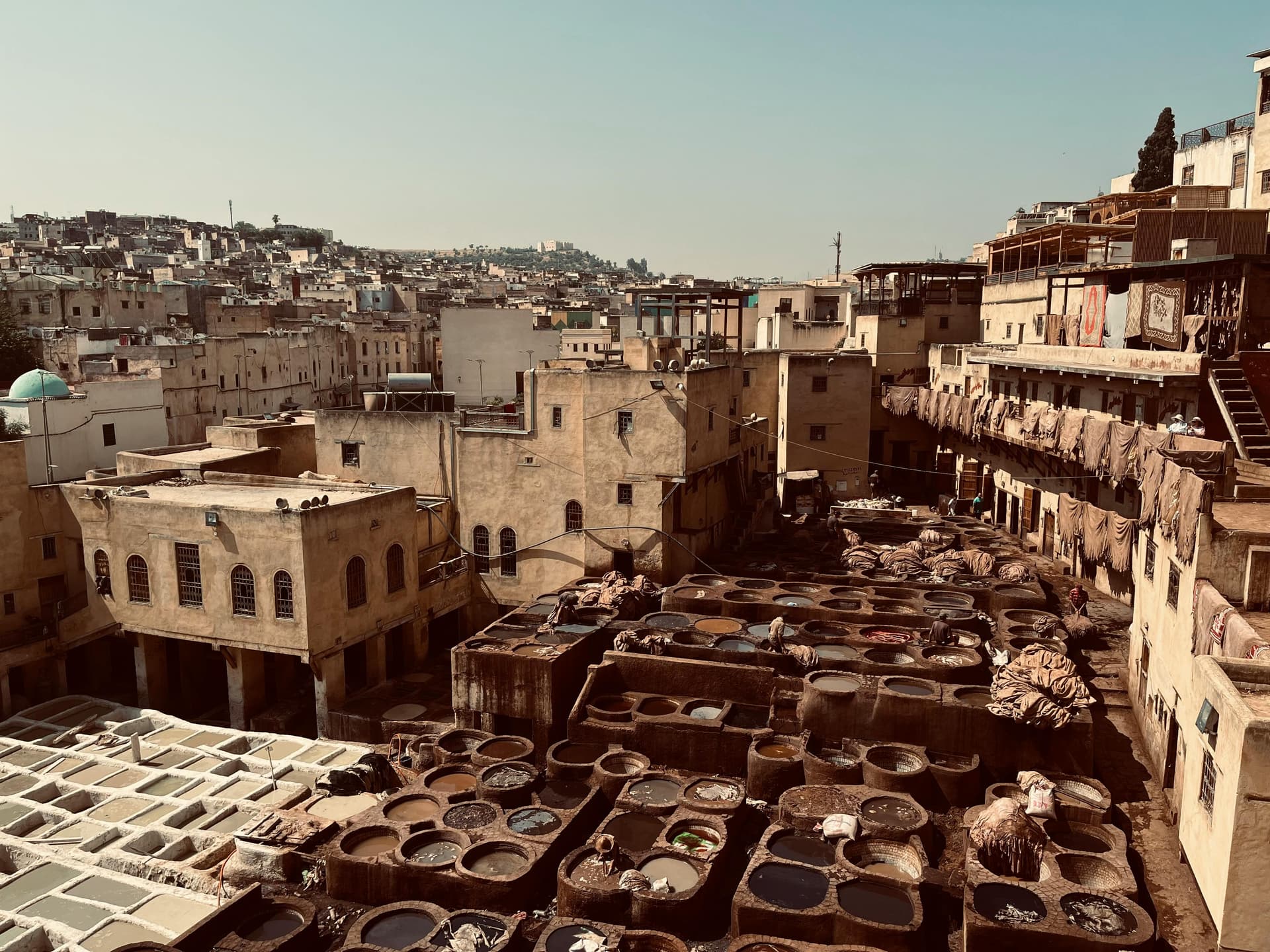
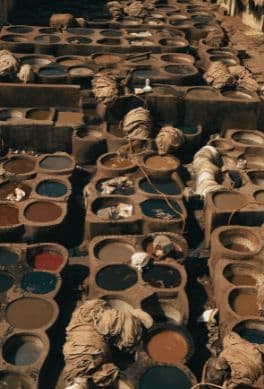
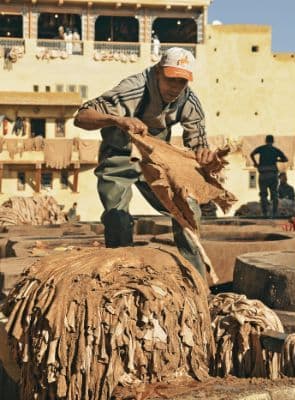
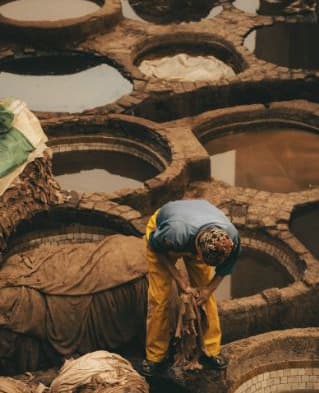
A little further away, near Bab Debbagh, the tanners' quarter reveals another facet. Here, the scene changes: tanning vats, stretched hides, gestures repeated for generations. The atmosphere is rawer, almost silent, as if suspended in time.
Between bustling souks and production sites, leather reveals itself in its full reality, from working the material to the finished object.
Learning at the heart of the workshops
Some discoveries are observed, others are felt. It all begins with contact with the material: a raw hide, dense, still marked by its origin. An artisan explains the transformations, and the way you look at finished objects changes immediately.
For some, the experience extends to the heart of the craft itself. Seated alongside an artisan, the first techniques are learned: handling the awl, tensioning the linen thread, following the grain of the leather.
Others choose a more complete immersion, starting at the tanneries at dawn to observe the work, before continuing in the afternoon at the workshop. At the end of this experience, it's not just images that remain, but a tangible understanding of handwork.