The Elegance of Basketry
The gesture woven into matter
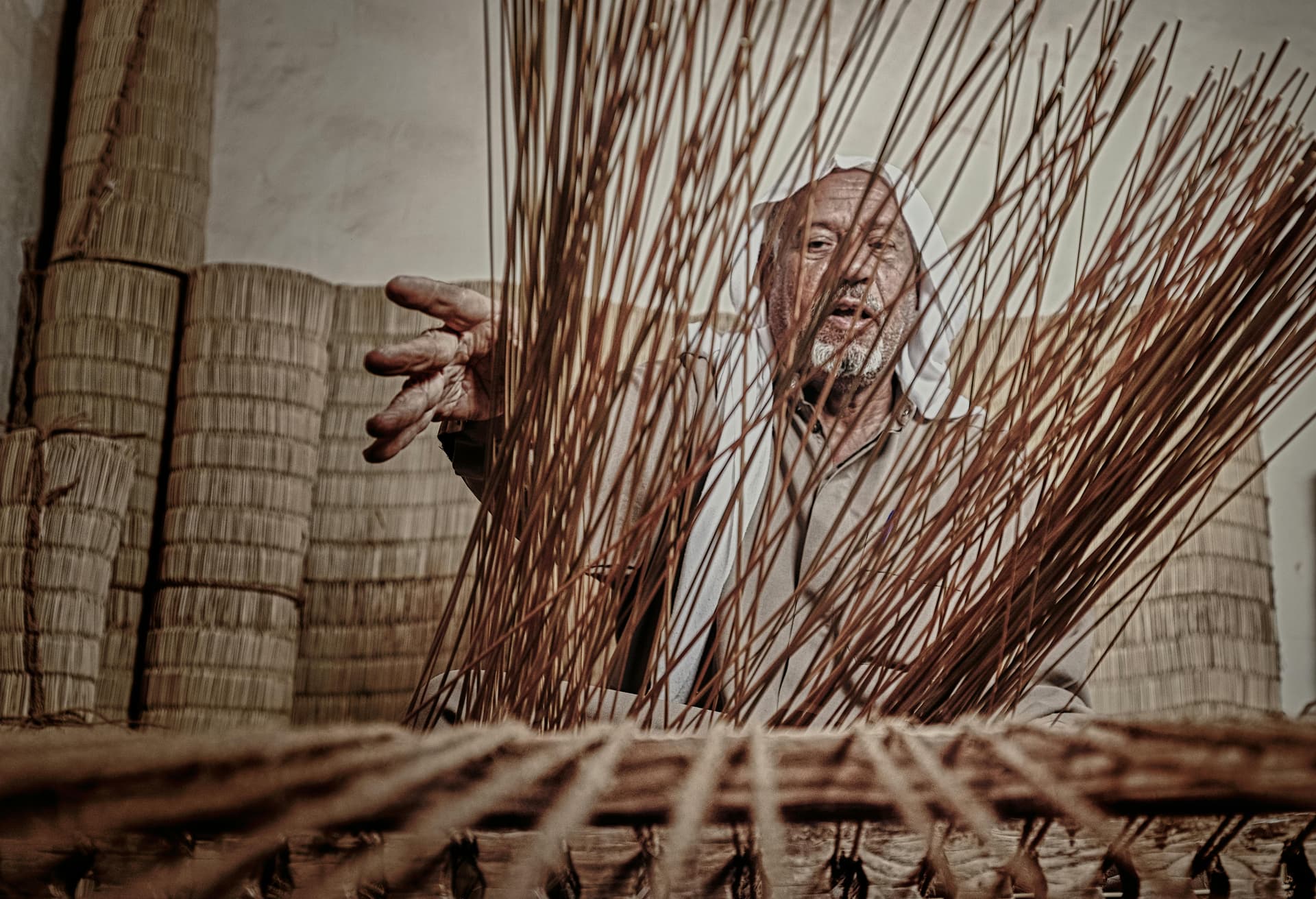
In Marrakech, basketry is a discreet craft, yet deeply rooted in everyday life. Using natural materials like palm, rush or raffia, artisans weave by hand simple, useful objects built to last. Baskets, panniers and bags take shape through a repeated, almost instinctive gesture.
This work, often passed down within families, finds its origins in rural practices where each object served a precise need. Over time, basketry has evolved, integrating colours, patterns and new forms, without ever losing its connection to raw material.
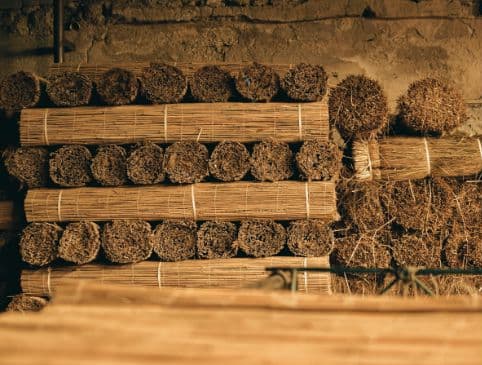
Here, everything starts from nature. The fibre is worked, softened, then interlaced with precision, giving birth to objects that are both light and resilient.
Between natural fibres and living forms
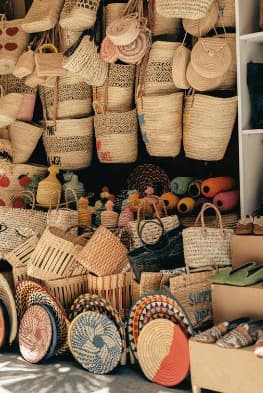
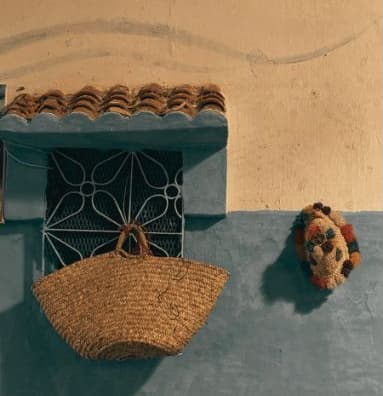
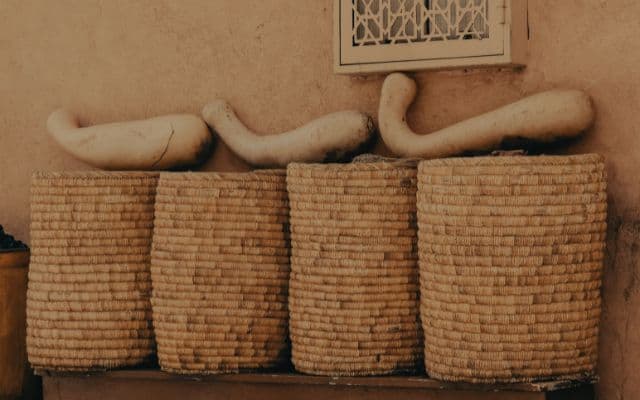
In the souks of Marrakech, basketry appears in touches, hung on walls or placed on the ground. Baskets pile up, shapes vary, textures echo one another. Some are raw, others embroidered with coloured threads, revealing an evolution between tradition and modernity.
In certain workshops, the gesture reveals itself more clearly. Seated on the floor or in the shade of a stall, artisans weave fibres with regularity, without haste. The eye follows the movement of hands, the material folding, crossing, gradually transforming.
The whole creates a peaceful atmosphere, almost silent, where time seems to stretch to the rhythm of weaving.
Weaving, assembling, slowing down
Initiating oneself to basketry means entering a work of repetition and rhythm. The material imposes its logic: it bends, sometimes resists, forces you to adjust the gesture. An artisan guides the first steps, shows how to start a base, maintain tension, follow a line.
Gradually, the gesture becomes more fluid. The weaving builds, row after row, until the form appears. The experience demands patience and attention, but brings immediate satisfaction.
Beyond the object created, it's another relationship with time that settles in. Slower, more grounded, where each movement counts.